


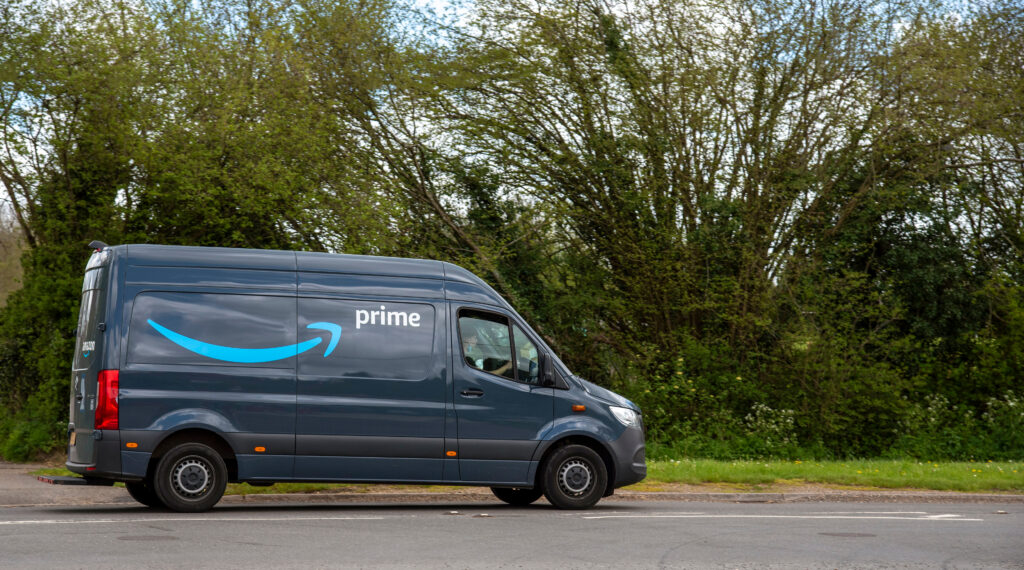
That blue van with the smile logo is everywhere now, on your street, in your neighbor's driveway, weaving through traffic on a tight delivery window that seems to get tighter every year. As Amazon's delivery footprint has grown, so has the number of serious accidents involving these vehicles, and the legal picture behind who is actually responsible is often far more complicated than it looks.
Joshua P. Golson represents South Carolina accident victims, including those injured by Amazon delivery vehicles. Call us today at (803) 284-8573 to discuss your situation.
Why Amazon Delivery Truck Accidents Are Increasing
The sheer volume of Amazon delivery vehicles on the road has grown dramatically in recent years, driven by rising e-commerce demand and Amazon's push for faster delivery windows. More vehicles on the road, combined with tight scheduling pressures and drivers navigating unfamiliar residential streets under time constraints, has created conditions where serious accidents are becoming more common.
According to NHTSA, distracted driving remains a significant risk factor across all vehicle types, and delivery drivers juggling navigation apps, package scanning, and delivery deadlines face a particularly high risk of distraction behind the wheel.
What Makes Amazon Delivery Accidents Legally Different
Unlike a standard car accident involving two private individuals, an Amazon delivery accident often involves a complex web of business relationships that directly affects who can be held legally responsible. Amazon has structured much of its delivery network in a way that creates layers of separation between the company and the driver actually behind the wheel, which can significantly complicate a liability claim if you do not understand how these relationships work.
Amazon, Delivery Service Partners, and Flex Drivers Explained
Amazon delivers packages through several different arrangements. Some drivers work for Delivery Service Partners, or DSPs, which are independent companies contracted by Amazon to operate delivery routes using Amazon-branded vehicles and, in many cases, Amazon's own logistics software and performance standards. Amazon Flex drivers, by contrast, are independent contractors who use their own personal vehicles to make deliveries, often signing up for delivery blocks through an app similar to rideshare driving. Understanding which category applies to your specific accident is often the first and most important step in figuring out who may be liable.
Who Can Be Held Liable
Depending on the specific facts of your accident, liability may extend to:
- The delivery driver: If their own negligence, such as speeding, distracted driving, or a rushed delivery, caused the crash
- The Delivery Service Partner company: If inadequate training, unsafe scheduling pressure, or poor vehicle maintenance contributed to the accident
- Amazon itself: In certain circumstances where the company's own policies, oversight, or control over the DSP's operations may support a claim of direct liability
- Other motorists: If a separate driver's actions contributed to or caused the crash independent of the delivery vehicle
Because Amazon's business structure was specifically designed to create legal distance between the company and individual drivers, identifying every potentially liable party often requires a genuinely thorough investigation.
What to Do After an Amazon Delivery Truck Accident
If you are involved in an accident with an Amazon delivery vehicle, taking the right steps can help protect both your health and your legal rights:
- Seek medical attention immediately, even if injuries seem minor at first
- Call the police and request an official accident report
- Take photographs of the accident scene, vehicle damage, and any visible injuries
- Get contact information from any witnesses
- Note any identifying information on the delivery vehicle, including branding, license plate, and any visible company markings
- Avoid discussing fault with the driver or any insurance representatives
- Call a South Carolina truck accident lawyer with Joshua P. Golson at (803) 284-8573 before giving a statement to any insurance company
What to Photograph and Document at the Scene
Useful documentation includes the delivery vehicle's license plate and any DSP or company branding visible on the vehicle, the general location and surrounding traffic conditions, any visible cargo or packages that may indicate the delivery status at the time of the crash, and the overall damage pattern to both vehicles involved. This documentation can become important later when trying to identify exactly which company or entity the driver was working for at the time of the accident.
Building the Liability Case
Every record, video, picture, and scrap of evidence is essential for a successful claim.
Records to Request (Incident, Medical, Employment/Delivery Logs)
A thorough investigation typically involves requesting the official police accident report, complete medical records documenting your injuries and treatment, and, where applicable, employment and delivery logs from the DSP or Amazon showing the driver's route, delivery schedule, and status at the time of the crash.
Under FMCSA safety regulations, commercial delivery operations are subject to specific federal safety standards, and records showing compliance, or noncompliance, with these standards can become important evidence in a liability dispute.
How Accident Reconstruction Can Help
In cases involving disputed facts, accident reconstruction experts can analyze physical evidence, vehicle damage patterns, and available data to help establish exactly how the crash occurred, which can be particularly valuable when a delivery company disputes the driver's speed, route, or conduct leading up to the accident.
Documenting Your Injuries and Medical Treatment
Consistent, thorough medical documentation is essential to any personal injury claim, including one involving an Amazon delivery vehicle. This means seeking prompt treatment, following all recommended care, and keeping detailed records of every appointment, diagnosis, and treatment plan connected to your injury. Gaps in treatment or inconsistent documentation can give an insurance company an opening to argue that your injuries are less severe than claimed, or unrelated to the accident itself.
How Insurance Companies Handle These Claims
Insurance companies handling Amazon delivery accident claims often work to minimize their exposure by disputing which entity was actually responsible for the driver at the time of the crash, questioning whether the driver was technically "on the clock" during a specific delivery window, or arguing that a DSP's insurance, rather than Amazon's, should bear primary responsibility. These disputes can significantly complicate and delay a claim if not addressed by someone who understands how Amazon's delivery network is structured.
Settlement vs. Litigation: What to Expect
Many of these claims can be resolved through negotiation once liability and the applicable insurance coverage are clearly established, but a lawsuit may become necessary if the responsible parties dispute liability, if there is uncertainty about which entity's insurance applies, or if a fair settlement cannot otherwise be reached. Given the layered business relationships involved in most Amazon delivery accidents, litigation sometimes becomes the most effective way to compel full disclosure of the relevant contracts, policies, and insurance coverage.
South Carolina Deadlines You Can't Miss
South Carolina generally requires personal injury lawsuits to be filed within three years of the date of the accident. Missing this deadline typically means losing the right to pursue compensation through the courts entirely, regardless of how strong the underlying claim might otherwise be. Given how complex Amazon delivery accident claims can be to investigate, it is important to begin that process well before this deadline approaches.
Speak to a South Carolina Personal Injury Firm to Learn More
Joshua P. Golson represents South Carolina residents injured in a wide range of serious accidents, including cases involving delivery trucks and broader truck accidents. We understand how Amazon's delivery network is structured, and we know how to investigate exactly which entity, the driver, a Delivery Service Partner, or Amazon itself, bears responsibility for your accident. In cases involving a head-on collision, being rear-ended, or, in the most tragic circumstances, a wrongful death claim, our team is ready to help.
If you have been injured in an accident involving an Amazon delivery vehicle, contact Joshua P. Golson at (803) 284-8573 for a consultation.
Frequently Asked Questions
Is Amazon Liable if One of Its Delivery Drivers Hits Me?
It depends on the driver's specific working relationship with Amazon at the time of the accident. Claims against Amazon directly are more complex than claims against a Delivery Service Partner or an individual Flex driver, and determining whether Amazon shares liability requires a careful review of the specific facts and business relationships involved.
What's the Difference Between an Amazon Driver, a DSP, and a Flex Driver?
A DSP driver works for an independent company contracted by Amazon to operate delivery routes using Amazon-branded vehicles. A Flex driver is an independent contractor using their own personal vehicle to make deliveries. Each arrangement carries different insurance and liability implications following an accident.
How Long Do I Have to File a Claim in South Carolina?
South Carolina generally requires personal injury lawsuits to be filed within three years of the date of the accident, though it is best to begin investigating a claim well before that deadline approaches.
What if the Driver Was Using a Personal Vehicle?
If the driver was using a personal vehicle, such as an Amazon Flex driver, liability and available insurance coverage can look different than in cases involving a company-branded delivery van. An attorney can help determine what coverage applies, including any commercial insurance the driver or Amazon may have carried during the specific delivery window.