

A jackknife truck accident can happen in seconds, and the consequences can be devastating. When an 80,000-pound semi-truck folds in on itself across multiple lanes of traffic, there is often very little time for other drivers to react. If you or someone you love was hurt in one of these crashes, you're probably wondering how it happened and whether it could have been prevented.
At the Law Office of Joshua Golson, we help people in South Carolina who have been seriously injured in truck accidents understand their rights and pursue the compensation they deserve. Read on for a clear explanation of how jackknife accidents happen, and call us at (803) 284-8573 when you're ready to talk.
What Is a Jackknife Truck Accident?
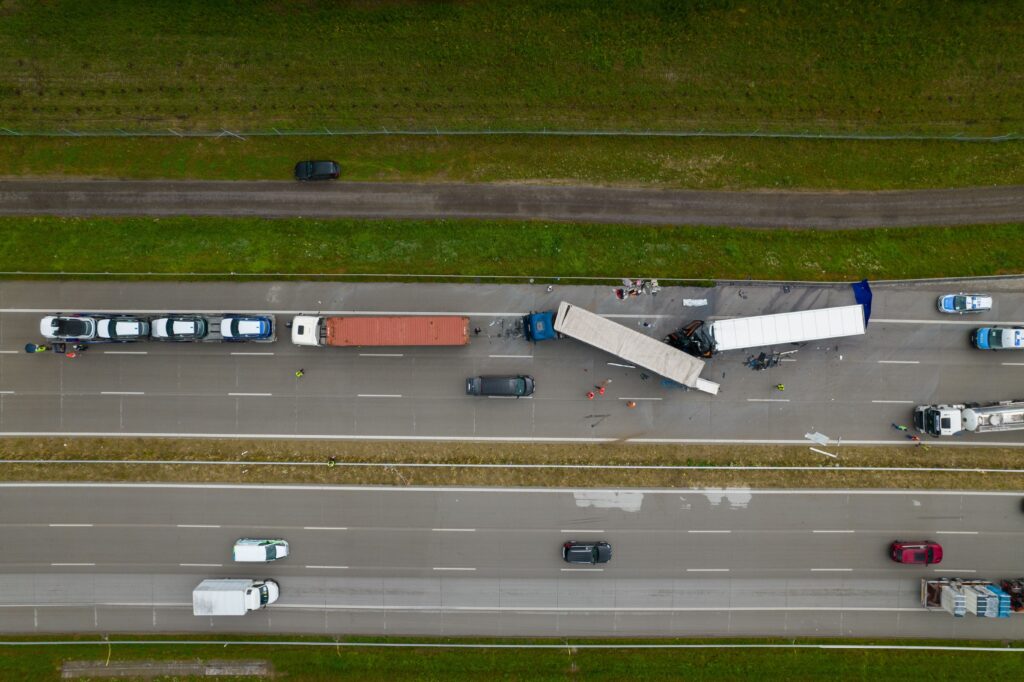
A jackknife accident occurs when the trailer of a large commercial truck swings outward and forms a sharp angle with the cab, similar to the folding motion of a pocket knife. Rather than traveling in a straight line, the trailer pushes sideways or forward, often sweeping across adjacent lanes and leaving drivers around it with nowhere to go.
These accidents typically happen when the trailer loses traction or when braking forces are applied unevenly between the cab and the trailer. Once a truck begins to jackknife, it is extremely difficult for even an experienced driver to regain control.
Why Jackknife Truck Accidents Are So Dangerous
Loss of Control and Multi-Lane Collisions
A jackknifing truck is unpredictable. The trailer can swing across multiple lanes in a matter of seconds, blocking traffic, striking vehicles, and creating chain-reaction collisions. Other drivers have almost no time to brake or maneuver out of the way.
The sheer size and weight of a fully loaded commercial truck amplifies the destruction. Passenger vehicles that are struck by a jackknifing trailer often sustain catastrophic damage, and the occupants frequently suffer severe or fatal injuries. These are among the most serious accidents that occur on South Carolina highways.
Common Causes of Jackknife Truck Accidents
While every crash has its own set of circumstances, jackknife accidents in South Carolina tend to involve one or more of the following factors:
- Sudden or improper braking
- Speeding or driving too fast for conditions
- Wet or slick road surfaces
- Driver error or inattention
- Mechanical failures, particularly in braking systems
- Improperly loaded or overloaded cargo
Each of these deserves a closer look, because understanding the cause of a jackknife accident is often the first step toward identifying who may be responsible.
Sudden Braking and Loss of Traction
How Braking Imbalance Leads to Jackknifing
One of the most common triggers for a jackknife accident is sudden, hard braking. When a truck driver slams on the brakes, the cab may decelerate faster than the trailer behind it. If the trailer wheels lock up or lose traction, the trailer continues moving forward and to the side while the cab slows down, creating that dangerous folding motion.
Federal Motor Carrier Safety Administration (FMCSA) regulations require commercial trucks to be equipped with functioning anti-lock braking systems, which are specifically designed to prevent wheel lockup and reduce jackknife risk. When those systems aren't properly maintained or when drivers apply brakes incorrectly, the risk of jackknifing increases significantly.
Speeding and Unsafe Driving Behavior
Reduced Reaction Time and Increased Stopping Distance
Large commercial trucks need significantly more distance to stop than passenger vehicles, even under ideal conditions. A fully loaded semi traveling at highway speed may need the length of nearly two football fields to come to a complete stop. When a truck driver is speeding, that stopping distance increases further, and the likelihood of overcorrecting or braking too hard grows with it.
Speeding also reduces the driver's ability to respond to sudden changes in traffic, road conditions, or the behavior of other vehicles. On South Carolina's interstates and rural highways, where speed limits are already high, a truck traveling above those limits creates a serious risk for everyone nearby.
Weather and Road Conditions in South Carolina
Rain, Slick Pavement, and Visibility Issues
South Carolina's climate brings frequent rain, and wet roads are a major contributing factor in truck jackknife accidents. Water on the road surface reduces tire traction dramatically, making it much easier for trailer wheels to lose grip during braking or when a driver makes a sudden maneuver.
Early morning fog, unexpected rain squalls, and shaded sections of highway that stay wet longer than surrounding pavement all create conditions where even a careful driver can lose control. The responsibility in these situations falls on truck drivers to slow down and adjust their driving to match the conditions around them. Driving at posted speed limits in heavy rain is not the same as driving safely in heavy rain, and trucking companies know this.
Truck Maintenance and Equipment Failures
Brake Malfunctions and Tire Issues
Commercial trucks are subject to strict federal maintenance requirements for good reason. Worn brake components, faulty air brake systems, and underinflated or defective tires all increase the likelihood of a jackknife accident. When a braking system fails partially, pressure may be distributed unevenly between the cab and the trailer, creating exactly the conditions that cause jackknifing.
Trucking companies are responsible for ensuring their vehicles meet federal safety standards and are regularly inspected and maintained. When a company cuts corners on maintenance to save money or keep trucks on the road longer, and a crash results, that company may bear significant legal responsibility for the harm caused.
Improperly Loaded or Overloaded Cargo
Weight Distribution and Trailer Instability
The way a trailer is loaded has a direct effect on how it handles on the road. Cargo that is too heavy, unevenly distributed, or improperly secured can shift during transport, throwing off the trailer's center of gravity and making it far more susceptible to swinging out during braking or turns.
Overloaded trailers also put excessive stress on braking systems, making it harder to slow down safely and increasing the risk of brake failure. Federal regulations set strict limits on cargo weight and require proper load securement, and violations of those standards can support a finding of negligence in a truck accident claim.
Who May Be Liable for a Jackknife Truck Accident
Truck Drivers, Trucking Companies, and Third Parties
Liability in a jackknife truck accident is rarely limited to just the driver behind the wheel. Depending on the circumstances, responsible parties may include:
- The truck driver, if the crash resulted from speeding, distracted driving, fatigue, or improper braking technique
- The trucking company, if it failed to maintain the vehicle, pressured drivers to meet unsafe schedules, or hired unqualified drivers
- A cargo loading company, if improper loading or overloading contributed to the trailer's instability
- A maintenance contractor, if faulty repair work caused a brake or tire failure
- A vehicle manufacturer, if a defective component contributed to the loss of control
Identifying all liable parties matters because it affects how much compensation may be available to you. An experienced truck accident attorney can investigate the crash, obtain trucking company records, review maintenance logs, and work with accident reconstruction experts to piece together exactly what happened.
What to Do After a Jackknife Truck Accident
If you've been involved in a jackknife truck accident in South Carolina, the steps you take in the aftermath can significantly affect your ability to recover compensation:
- Call 911 immediately and get medical attention, even if you don't believe you're seriously hurt. Some injuries don't show symptoms right away.
- Document the scene if you're safely able to do so. Photographs of vehicle positions, road conditions, skid marks, and damage are valuable evidence.
- Get the truck driver's name, license, and insurance information, as well as the name of the trucking company.
- Identify any witnesses and collect their contact information.
- Avoid giving recorded statements to the trucking company's insurance carrier before speaking with an attorney.
- Contact a South Carolina truck accident lawyer as soon as possible.
- Contact the Law Office of Joshua Golson at (803) 284-8573
- Evidence in these cases, including electronic logging device data and black box records, can be lost or overwritten quickly if not preserved promptly.
Contact the Law Office of Joshua Golson for Legal Guidance
Jackknife truck accidents are violent, traumatic events, and the recovery process, both physical and legal, can be long and complicated. You shouldn't have to navigate it alone.
The Law Office of Joshua Golson handles personal injury cases throughout South Carolina, including serious truck accident claims. We take the time to understand what happened, explain your options clearly, and pursue every avenue of compensation available to you. Attorney Joshua Golson has worked within the courts and fought for his clients for years, and he is eager to put that experience to work for you.
Contact us online at (803) 284-8573 today to schedule your free consultation and get in touch with a personal injury lawyer that can help break down your situation and place you on the road to recovery. There's no pressure and no obligation. Just an honest conversation about your situation and what we can do to help.